From the archive
Kazakhstan and Qatar Forge Strategic Alliance: A Model for Middle Power Diplomacy
Kazakhstan and Qatar forge a strategic alliance, creating a bridge between Central Asia and the Gulf and serving as a model for middle power diplomacy.

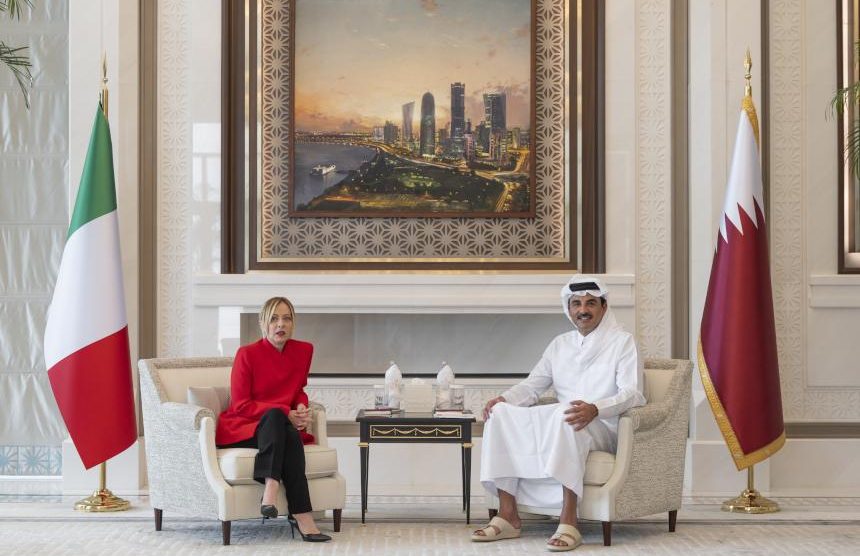
Kazakhstan's President Kassym-Jomart Tokayev recently concluded a significant visit to Qatar, where he engaged in high-level discussions with the Amir of Qatar, Sheikh Tamim bin Hamad Al Thani. During his visit, President Tokayev met with the Amir of Qatar, Sheikh Tamim bin Hamad Al Thani, to address a full agenda. The two leaders focused on advancing their bilateral strategic partnership, showing a shared commitment to deepening their relationship. Their discussions also encompassed key international issues, including the prevailing situation in the Middle East, reflecting a mutual interest in regional stability and global affairs. Beyond political and security matters, President Tokayev and Sheikh Tamim also explored prospects for enhanced economic cooperation, investment, logistics, and strengthening regional stability. This broad scope of topics notes the multifaceted nature of their burgeoning alliance, aiming to foster growth and security across various sectors. Strengthening regional stability was indeed another significant topic of conversation between the two heads of state, emphasizing their roles as influential actors in their respective regions.
Bridging Central Asia and the Gulf
Domenico Palmieri, an expert at the Italian Institute for Asia, provided insightful commentary on the evolving relationship between Kazakhstan and Qatar. Palmieri specializes in international relations and Europe-Asia cooperation, making his perspective particularly relevant to understanding this cross-continental partnership. He stated that the Kazakhstan-Qatar partnership is creating a strategic bridge between Central Asia and the Gulf Cooperation Council, effectively linking two dynamic regions. This collaboration is not merely transactional; it establishes an important geopolitical corridor linking Eurasia and the Middle East, promising to reshape trade routes and diplomatic ties. Palmieri further noted the complementary strengths of the two nations: Qatar possesses substantial financial resources and considerable expertise in the liquefied natural gas sector, positioning it as a key energy player. Conversely, Kazakhstan is endowed with vast mineral wealth, offering significant resources for global markets, and possesses considerable agricultural potential, which is key for food security.
Kazakhstan's foreign policy is characterized by its multi-vector approach, a strategy designed to diversify its international relations and partnerships. Palmieri noted, "Kazakhstan's multi-vector foreign policy under President Tokayev has significantly strengthened the country's position on the international stage." He explained that by diversifying its foreign relations and avoiding over-reliance on any single neighbor or global center of power, Kazakhstan has successfully enhanced its diplomatic maneuverability. This strategic independence has been instrumental in attracting a broad range of foreign investment, thereby significantly enhancing the resilience of the national economy. Palmieri added, "its openness to cooperation with the European Union, the United States, China, Türkiye, and the Gulf states has helped attract a broad range of foreign investment, significantly enhancing the resilience of the national economy." This approach not only safeguards Kazakhstan's interests but also positions it as a reliable and attractive partner for diverse international actors.
President Tokayev consistently emphasizes dialogue, mediation, and multilateral cooperation as cornerstones of Kazakhstan's foreign policy. This balanced approach is steadily positioning Kazakhstan as one of Eurasia's key diplomatic and logistics hubs, making it a valuable partner for all major international players, according to Palmieri. A prime example of Kazakhstan's commitment to regional diplomacy is its role in providing a neutral platform for negotiations in the Astana Process on Syria, which demonstrated its capacity to facilitate complex international discussions. In parallel, Qatar has also strengthened its role as a diplomatic player on the global stage, actively engaging in mediation efforts and promoting peaceful resolutions to conflicts, further aligning its diplomatic objectives with Kazakhstan's.
Strengthening Strategic Autonomy
The evolving partnership between Kazakhstan and Qatar is not merely about economic gain; it is fundamentally geared towards bolstering their strategic autonomy. Both Kazakhstan and Qatar are using this partnership to strengthen their strategic autonomy while reducing dependence on traditional global centers of power. This shared objective allows them to pursue independent foreign policy agendas and economic development paths. Both nations, identified as middle powers, play a key role in maintaining stability amidst increasing competition among larger global actors. Middle powers like Kazakhstan and Qatar serve as a stabilizing force amid intensifying competition among major powers, offering a counterbalance to geopolitical tensions. Dialogue between such middle powers is seen as instrumental in uniting countries dedicated to upholding international law and enhancing global governance institutions. This collaboration fosters a more multipolar world order where diverse voices contribute to global solutions.
Kazakhstan has solidified its standing as a prominent middle power within the Central Asian region, consistently advocating for regional cooperation and stability. Kazakhstan has consolidated its position as a leading middle power in Central Asia, actively shaping the geopolitical landscape of its immediate neighborhood. Increased collaboration between Astana and Doha is expected to contribute to greater stability across Eurasia and the Middle East, extending the positive impact of their partnership beyond their immediate borders. Joint diplomatic initiatives undertaken by the two countries hold the potential to alleviate tensions along vital international transport and energy corridors, ensuring the smooth flow of global trade and resources. The partnership between Kazakhstan and Qatar can also provide new impetus to platforms such as the Conference on Interaction and Confidence Building Measures in Asia (CICA), a forum dedicated to enhancing security and cooperation across the Asian continent. This renewed energy could lead to more strong regional security frameworks and collaborative projects.
Key Areas for Cooperation
Domenico Palmieri, an expert at the Italian Institute for Asia, identified several key areas ripe for enhanced cooperation between Kazakhstan and Qatar, with the development of the Middle Corridor standing out as the most promising. Palmieri stated, "The most promising area of cooperation is the development of the Middle Corridor." He elaborated that combining Qatar's advanced logistics expertise with the immense potential of the Trans-Caspian International Transport Route could significantly improve the efficiency of freight transport between China and Europe. This collaboration aims to enhance the flow of goods across the Eurasian landmass, offering a faster and more reliable alternative to existing trade routes. The Middle Corridor, also known as the Trans-Caspian International Transport Route, traverses Kazakhstan, the Caspian Sea, Azerbaijan, Georgia, and Türkiye, providing a key link between East and West. Qatar's investment and know-how in port management, shipping, and supply chain optimization could be transformative for this ambitious project, reducing transit times and costs. This strategic infrastructure development would not only benefit both countries economically but also solidify their roles as key players in global trade networks.
Cooperation in the agro-industrial sector and food security also holds considerable promise, according to Palmieri. He noted, "Cooperation in the agro-industrial sector and food security also holds considerable promise." Kazakhstan possesses vast agricultural resources, including extensive arable land and significant livestock potential, positioning it as a potential reliable supplier of high-quality agricultural products to the Gulf states. This initiative could bolster food security for Qatar and other Gulf nations, reducing their dependence on distant or volatile supply chains. Kazakhstan is well-positioned to become a reliable supplier of agricultural products to the Gulf states, offering a stable source of staples and other food items. This partnership could involve investments in modern agricultural technologies, irrigation systems, and logistics infrastructure within Kazakhstan to optimize production and export capabilities. For Qatar, this means diversifying its food sources and enhancing national resilience against global supply disruptions.
Another area with strong potential is cooperation in the digital economy and financial technology. Palmieri noted, "Another area with strong potential is cooperation in the digital economy and financial technology." He suggested that collaboration between the Astana International Financial Centre (AIFC) and the Qatar Financial Centre (QFC) could help advance the market for green bonds, digital banking, and other innovative financial instruments. This partnership could foster growth in sustainable finance and technological advancements in the banking sector for both countries. The AIFC has established itself as a regional hub for financial services, particularly in Islamic finance and fintech, while the QFC is a leading financial and business center in the Middle East. By leveraging their respective strengths and regulatory frameworks, they can create a synergistic environment for developing new financial products and services, attracting international capital, and promoting sustainable development goals through innovative financial mechanisms.
Future Prospects and Continuity
President Tokayev has reaffirmed his invitation for the Amir of Qatar, Sheikh Tamim bin Hamad Al Thani, to visit Kazakhstan. This invitation shows the ongoing commitment to high-level engagement and the desire to further solidify bilateral ties. A state visit could lead to the signing of a full strategic partnership agreement between the two nations, elevating their relationship to a new level of cooperation. Such a visit could also pave the way for multibillion-dollar joint projects involving Samruk Kazyna, Kazakhstan's sovereign wealth fund, and the Qatar Investment Authority, Qatar's sovereign wealth fund. These large-scale investments would signify a deep financial commitment and a shared vision for long-term economic collaboration. President Kassym-Jomart Tokayev has been actively involved in developing Kazakhstan-Qatar relations since his tenure as foreign minister, demonstrating a consistent and long-standing dedication to this partnership. This continuity in diplomatic leadership ensures institutional consistency and helps shield bilateral ties from short-term political changes, providing a stable foundation for future growth and cooperation.