From the archive
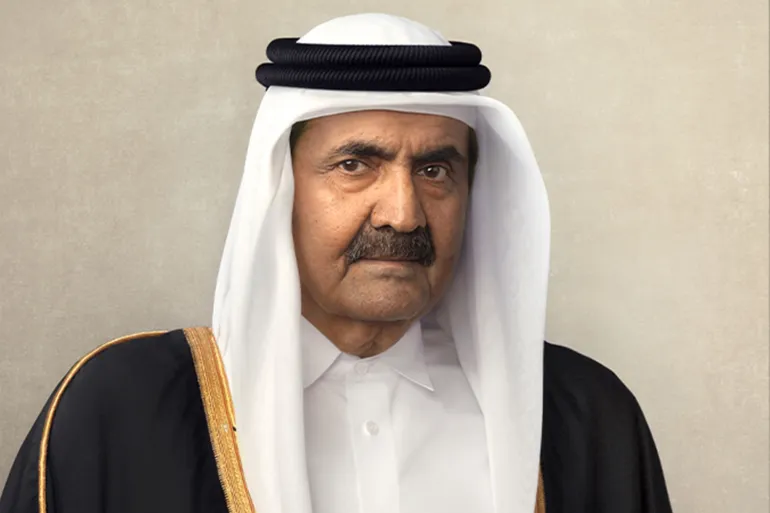
Sheikh Hamad bin Khalifa Al Thani: Architect of Qatar's Sporting Ascendancy
Former Emir Sheikh Hamad bin Khalifa Al Thani built Qatar's sporting ascendancy, laying foundations for its rise as a global hub and the 2022 World Cup.
Sheikh Hamad bin Khalifa Al Thani, who served as Qatar's emir from 1995 until his abdication in 2013, died on Sunday at the age of 73. His passing marks the end of an era for the former ruler who oversaw significant changes in Qatar during his time as head of state. The former emir's tenure was characterized by a period of modernization and strategic initiatives that profoundly impacted the nation's trajectory, including its growing prominence in international sports. His leadership was instrumental in transforming Qatar into a dynamic player on the global stage, particularly through an ambitious focus on sports development and hosting major international events. This strategic vision aimed to elevate the nation's profile and foster a culture of athleticism within the country.
Building a Sporting Nation
Sheikh Hamad bin Khalifa Al Thani chaired Qatar's Supreme Council for Youth Welfare from 1979 until 1991, prior to becoming emir. This early involvement in youth and sports development laid foundational groundwork for his later policies. During his rule as emir, Qatar launched the Qatar Open women's tennis tournament in 2001, complementing the men's Qatar Open, which had begun in 1993. These tournaments quickly became prominent fixtures on the international tennis calendar, attracting top-tier athletes and global attention to Qatar's burgeoning sports infrastructure. The nation also hosted a series of international sporting events, starting with the 2004 World Table Tennis Championships. This event demonstrated Qatar's capability to manage and execute large-scale international competitions, setting a precedent for future endeavors. In 2004, Al Shaqab, a world-renowned equestrian center, became part of Qatar Foundation, further integrating elite sporting institutions into the national development framework and emphasizing the importance of equestrian sports within Qatari culture.
The country continued to host major competitions, solidifying its reputation as a premier destination for international sports. This included the 2005 World Weightlifting Championships, which brought athletes and spectators from around the globe to Doha. The momentum continued with the hosting of the 2006 Asian Games, a monumental event that showcased Qatar's organizational prowess and its advanced facilities on a continental scale. In 2008, the Aspire Zone, a full sports academy and complex dedicated to sports excellence, officially opened. This facility was designed to identify and develop Qatari athletes, as well as to serve as a training hub for international teams, further cementing Qatar's commitment to sports science and performance. Qatar further expanded its hosting portfolio with the 2010 World Indoor Athletics Championships, demonstrating its versatility across various sporting disciplines. The nation also successfully hosted the 2011 AFC Asian Cup, a significant football tournament that drew widespread regional interest. That same year, Qatar also hosted the 2011 Arab Games, fostering regional camaraderie and competition. The ninth World Conference on Sport and the Environment was also held in Qatar during his leadership, showing a commitment to sports development and related global initiatives, noting the broader impact and responsibilities associated with sports.
Legacy and National Vision
An Emiri decree established Qatar National Sport Day in December 2011, further integrating sports into the national identity. This decree was a key moment, institutionalizing the importance of physical activity and healthy living for all citizens and residents. The inaugural National Sport Day was subsequently observed in February 2012, becoming an annual event dedicated to promoting physical activity and healthy lifestyles across the country. This initiative reflected a broader strategy to embed sports at various levels of Qatari society, extending beyond elite competitions to community engagement and public health. The establishment of this national day showed the leadership's vision for sports as a component of national development and public well-being, recognizing its role in fostering social cohesion and improving quality of life. This strategic approach aimed to create a sporting culture that permeated all aspects of society, from grassroots participation to professional achievement.
The current president of the Qatar Olympic Committee is Sheikh Tamim bin Hamad Al Thani. His leadership connects the ongoing national sports agenda to the foundational efforts initiated during the tenure of Sheikh Hamad bin Khalifa Al Thani. This continuity ensures that the long-term vision for Qatar's sporting future remains consistent and strong. The sustained commitment to sports development, from the highest levels of government, has allowed Qatar to build upon its initial successes. The continuity in leadership of key sporting bodies helps to maintain the long-term strategic direction for Qatar's athletic endeavors and its role on the international sports stage. This includes sustained investment in infrastructure, talent development, and event hosting, which have become hallmarks of Qatar's sporting presence. These efforts are geared towards nurturing a new generation of athletes and maintaining Qatar's standing as a hub for international sports.
Global Hub Aspirations
Qatar secured the right to host the 2022 FIFA World Cup in December 2010, a decision that marked a significant milestone in the nation's strategy to become a global sports hub. This achievement was the culmination of a focused effort led by Sheikh Mohammed bin Hamad Al Thani, who successfully spearheaded Qatar's bid for the prestigious international tournament. The successful bid positioned Qatar as the first Middle Eastern nation to host the event, showing its growing prominence on the world stage and its ambition to bridge cultural divides through sports. Hosting the FIFA World Cup was a central component of Qatar's broader vision to enhance its international profile and diversify its economy through sports and tourism, moving beyond its traditional reliance on hydrocarbon resources. The successful bid was not merely about hosting a tournament; it was a strategic declaration of Qatar's intent to be a significant player in global affairs and a destination for major international events. This ambition reflected Sheikh Hamad bin Khalifa Al Thani's long-term vision for Qatar's development and its role in the global community. The legacy of his leadership in fostering sports infrastructure, developing local talent, and championing international partnerships provided the essential platform upon which such a monumental achievement could be built. His strategic foresight in integrating sports into the national identity and development plans continues to shape Qatar's trajectory today.