From the archive
Qatar's Gift: A Costly Security Blunder
Accepting Qatar's new Air Force One was a costly security blunder due to high retrofitting costs, defensive concerns, and Qatar's ties to Iran, according…
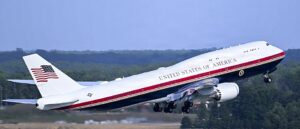
Qatar offered to give President Trump a new Air Force One in 2025, but according to author Robert L. Maronic, accepting the Qatari plane was "a big mistake, wrong and perhaps foolishly naïve." Mr. Maronic stated, "Accepting the new Qatari Air Force One was a big mistake, wrong and foolishly naïve because of the extremely high cost of retrofitting it and other unforeseen problems with installing defensive weaponry." He added that President Trump "should have politely said 'no thank you' and 'end of discussion.'" The author's strong assertion showed the multifaceted concerns surrounding the acceptance of the aircraft, ranging from financial implications to profound security vulnerabilities.
Concerns regarding the aircraft's security were noted when President Trump reportedly ditched the new Air Force One in Turkey. The New York Post, in an article by Stephen Nelson published July 8, 2026, titled "Trump Ditches New Air Force One In Turkey, Stoking Iran Threat Fears: ‘I’m Number One On The Kill List,’" reported on the President's decision. This article specifically noted the President's personal security concerns, noting anxieties about being "Number One On The Kill List" in the context of Iran. The New York Times, in a July 9, 2026 article by Tyler Pager, Julia E. Barnes, et als. Titled "Security Precaution Led Trump To Use Old Air Force One In Leaving Turkey," reported the new aircraft "lacked the same defensive countermeasures that the security features of the old model had, including its advanced antimissile capabilities." This revelation from The New York Times article further intensified the debate over the new aircraft's suitability for presidential transport, pointing to a critical lapse in its protective measures.
Questionable Costs and Security Gaps
The new Qatari Boeing 747 Air Force One, intended for presidential use, underwent security upgrades that cost $400 million, according to the US Air Force. This figure, provided by the US Air Force, represented the official cost for retrofitting the aircraft with necessary security enhancements. Other estimates for the retrofitting placed the cost significantly higher, exceeding $1 billion, as reported by NBC-consulted experts, Democratic lawmakers, and various media investigations. These alternative estimates pointed to a substantially greater financial outlay than initially disclosed. This created a discrepancy of $600 million between the US Air Force's figure and the higher estimates, raising serious questions about cost transparency and the true financial burden of the project. The stark difference in these figures sparked considerable debate among lawmakers and the public, contributing to the overall controversy surrounding the Qatari gift.
Beyond the financial concerns, reports indicated that the new Air Force One lacked sufficient security guarantees to defend against a surface-to-air missile or a swarm of drones. These alleged security gaps raised questions about the aircraft's protective capabilities for presidential travel. The absence of strong defensive countermeasures was a critical point of contention, especially given the high-threat environments that Air Force One is expected to navigate. Amid these concerns, the new Qatari Air Force One was grounded on July 10, a decision that showed the severity of the security deficiencies identified. The grounding further solidified the perception that the aircraft, despite its substantial retrofitting costs, was not deemed safe enough for presidential operations.
Qatar's Troubled Alliances
The United States and Qatar have maintained a diplomatic relationship ranging from good to excellent since 1972. This long-standing connection has historically positioned Qatar as a key partner in the Middle East for the United States. Despite this long-standing connection, Qatar has extended political refuge to the Hamas leadership in Doha since 2012. This arrangement has persisted even as Hamas is designated a terrorist organization by the United States, creating a complex and often contradictory dynamic in the bilateral relationship. The provision of sanctuary to a group deemed a terrorist organization by its primary Western ally has consistently drawn criticism and scrutiny.
Another aspect of Qatar's foreign policy involves its close diplomatic and economic ties with Iran. Before 2026, Qatar frequently served as a pragmatic mediator between various international parties and the Islamic Republic. This role often placed Qatar in a unique position, balancing its relationships with Western allies and its regional partnerships, particularly with a nation often at odds with US foreign policy objectives. The provision of refuge to Hamas leaders and its engagement with Iran have both been subjects of scrutiny regarding Qatar's broader geopolitical alignment, casting a shadow over its intentions and reliability as an ally, especially in sensitive security matters. The intricate web of Qatar's foreign relations, marked by its engagement with various actors in the region, adds layers of complexity to any security arrangement involving the nation.
Author's Stark Warnings
Robert L. Maronic stated that accepting the Qatari plane was "a big mistake, wrong and perhaps foolishly naïve." He elaborated, "Accepting the new Qatari Air Force One was a big mistake, wrong and foolishly naïve because of the extremely high cost of retrofitting it and other unforeseen problems with installing defensive weaponry." Maronic compared the situation to an analogous security risk in the Cold War era, stating, "Allowing the US to accept a new Qatari Air Force One would have been like allowing the Soviet Union to build a new US embassy in Moscow staffed by Russians in 1985." He added that "The security concerns would have been enormous, nightmarish, and laughable with hundreds of listening devices in the drywall." This vivid historical analogy served to show the profound security implications Maronic believed were inherent in accepting a gift of such strategic importance from a nation with complex and sometimes conflicting alliances. The author's comparison noted the potential for espionage and compromise, suggesting that the risks far outweighed any perceived benefits.
The author questioned the decision to fly the Qatari Air Force One to Turkey, stating, "Why Trump would fly the Qatari Air Force One to Ankara, Turkey, which is only 655 miles ('as the crow flies') from Iran’s northwestern border is beyond my understanding." Maronic contended that "The US Air Force and the Secret Service both screwed up," and asserted, "Whoever made the decision to fly the new Air Force One to Ankara, Turkey should be fired immediately." The geographical proximity to Iran, a nation with which the United States has significant tensions and which was reportedly a source of threat concerns for President Trump, made the choice of destination particularly perplexing to Maronic. A New York Times article on July 9 stated that the Qatari Air Force One unbelievably "lacked the same defensive countermeasures that the security features of the old model had, including its advanced antimissile capabilities." This critical security deficiency, confirmed by The New York Times, amplified Maronic's concerns about the decision to deploy the aircraft to such a sensitive region.
Maronic concluded that "It is painfully obvious that the new Air Force One was not retrofitted with sufficient security guarantees to stop a surface-to-air missile or, more likely, a swarm of drones." He suggested that if it had been adequately retrofitted, "Trump would have flown back to the US on the new jet without any worry." The author's assessment directly challenged the official narrative regarding the aircraft's capabilities, implying a significant failure in the retrofitting process. He also raised concerns about potential embedded devices, asking, "Plus, who knows what malevolent microchips could have been embedded in the Qatari Air Force One after its initial construction in 2012." This question introduced the specter of sophisticated espionage, adding another layer of potential vulnerability to the aircraft. Maronic does not believe President Trump's explanation for using the original Air Force One for the return journey from Ankara. He stated, "I do not believe Trump when he said that he flew back on the original Air Force One 'out of Ankara so that the newer plane could be shown off at Mildenhall Air Force Base in England to give U.S. Troops a “chance to tour the aircraft.”'" He concluded, "Trump embarrassingly must think that the American public is gullible and stupid." Maronic's skepticism showed his belief that the President's public explanation was a transparent attempt to mask deeper security issues. Maronic also cited the grounding of the new aircraft on July 10, stating, "I would not exactly call the new Air Force One a advanced aircraft to protect the president even with the expensive retrofitting, and especially after it was grounded on July 10." The grounding served as concrete evidence, in Maronic's view, that the aircraft was far from meeting the rigorous security standards required for presidential transport.