From the archive
Qatar Ministry Launches New Vessel for Marine Environmental Surveillance
Qatar's Ministry of Environment and Climate Change has launched a new vessel to enhance marine environmental surveillance and research capabilities.
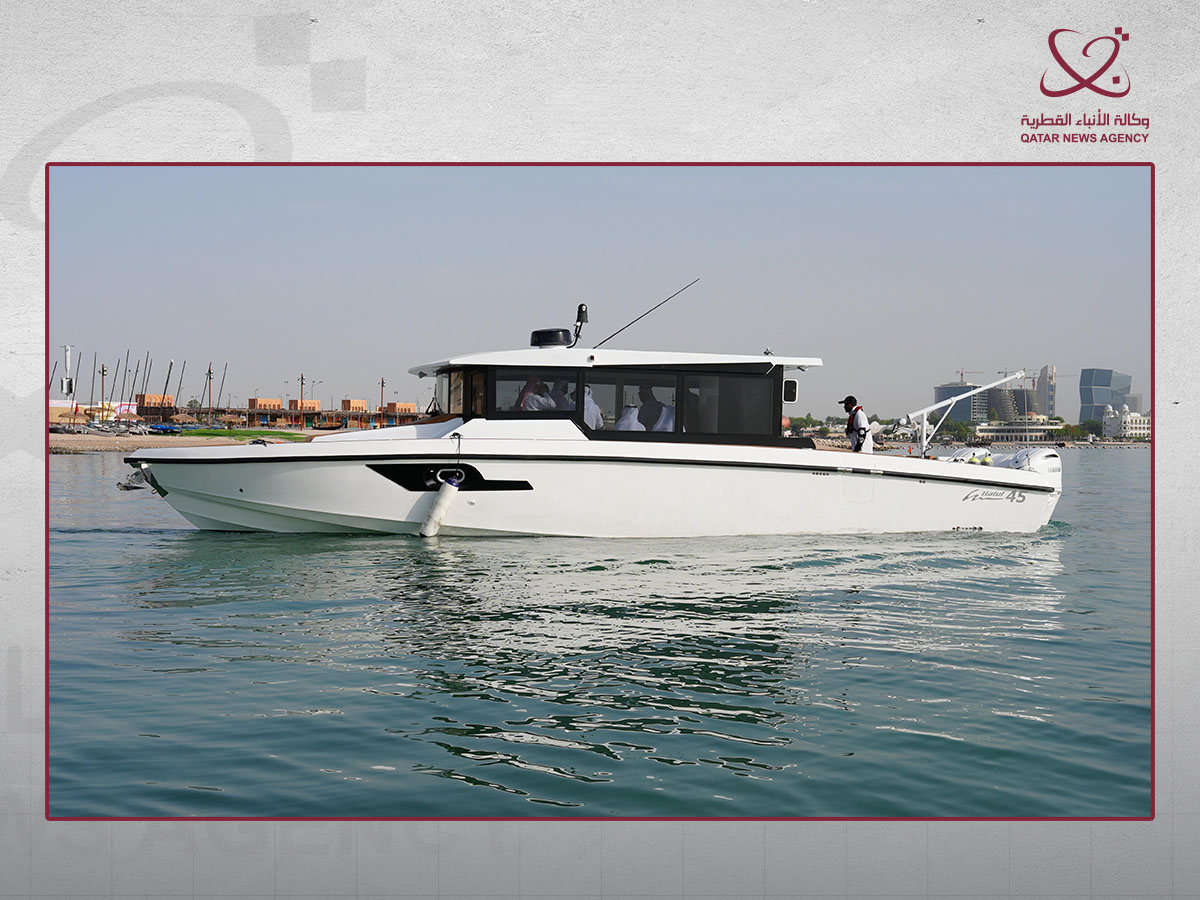
The Ministry of Environment and Climate Change (MECC) in Qatar has launched a new vessel dedicated to marine monitoring and scientific research. This significant initiative aims to enhance the country's capabilities in surveying its marine environment, marking a key step for the MECC in strengthening efforts to protect Qatar's vital marine ecosystems and conduct essential scientific studies. The launch of this specialized vessel shows the Ministry's commitment to advancing environmental stewardship and understanding the complex dynamics of its coastal and offshore waters.
Advanced Vessel Capabilities
The new vessel, specifically designed for full marine environmental surveillance and scientific research, measures 45 feet in length and has the capacity to comfortably accommodate up to 12 people. Its construction incorporates advanced navigation and communication systems, providing full capabilities for its diverse operational requirements. These advanced systems feature global positioning system (GPS) technology for precise location tracking, sophisticated radar for enhanced situational awareness, and connectivity to the Starlink satellite network, ensuring reliable communication and accurate navigation during missions, even in remote areas. The integration of these technologies ensures that researchers and crew can operate effectively and safely across Qatar's marine territories.
For its core environmental monitoring functions, the vessel is exceptionally well-equipped with specialized tools. It incorporates advanced water-quality monitoring systems designed to assess various critical parameters of marine habitats, including temperature, salinity, dissolved oxygen, and nutrient levels. Additionally, it carries marine sediment sampling tools, allowing for the systematic collection and analysis of seabed materials, which are key for understanding benthic ecosystems and pollution levels. Plankton nets are also on board to facilitate the study of marine microorganisms—phytoplankton and zooplankton—which form the base of the marine food web and are key indicators of ecosystem health. The vessel further provides dedicated storage spaces for diving cylinders, supporting extensive underwater research and observation activities conducted by marine scientists and environmental specialists, enabling direct interaction with the marine environment.
Strategic Environmental Goals
The launch of the new vessel is integral to Qatar's ongoing efforts to enhance the quality of environmental data collected across its marine territories. This initiative aims to provide accurate and reliable information, which is essential for informed decision-making regarding the management and protection of marine ecosystems. The vessel's operational deployment aligns directly with the broader objectives outlined in Qatar National Vision 2030, a full national development plan that includes strategic environmental protection and sustainable resource management as key pillars. By strengthening its data collection capabilities through this advanced vessel, the Ministry of Environment and Climate Change seeks to bolster its capacity for marine environmental surveillance and scientific research, directly supporting the nation's long-term environmental goals. This development represents a concrete and significant step towards achieving the vision's ambitious targets for environmental sustainability and the preservation of Qatar's natural heritage.
Operational Efficiency and Cost
The new vessel is powered by four engines, providing the necessary operational efficiency and speed for its demanding marine surveillance and research missions. These powerful engines ensure swift deployment to various research sites and reliable operation in diverse sea conditions. An onboard environmental laboratory is also included, enabling preliminary analyses and the immediate processing of field samples directly at sea. This allows for immediate assessment of collected data, streamlining the research process by reducing the need to return to shore for initial evaluations and enhancing the vessel's overall operational capabilities. The integration of these strong features is meticulously designed to support the Ministry of Environment and Climate Change's objectives for effective and efficient marine environmental monitoring, ensuring that critical data can be gathered and analyzed with precision and speed.