From the archive
Qatari Women Driving Transformation in Education and Leadership
Qatari women are driving transformation in education and leadership, holding key roles in teaching and administration, reflecting a national empowerment…
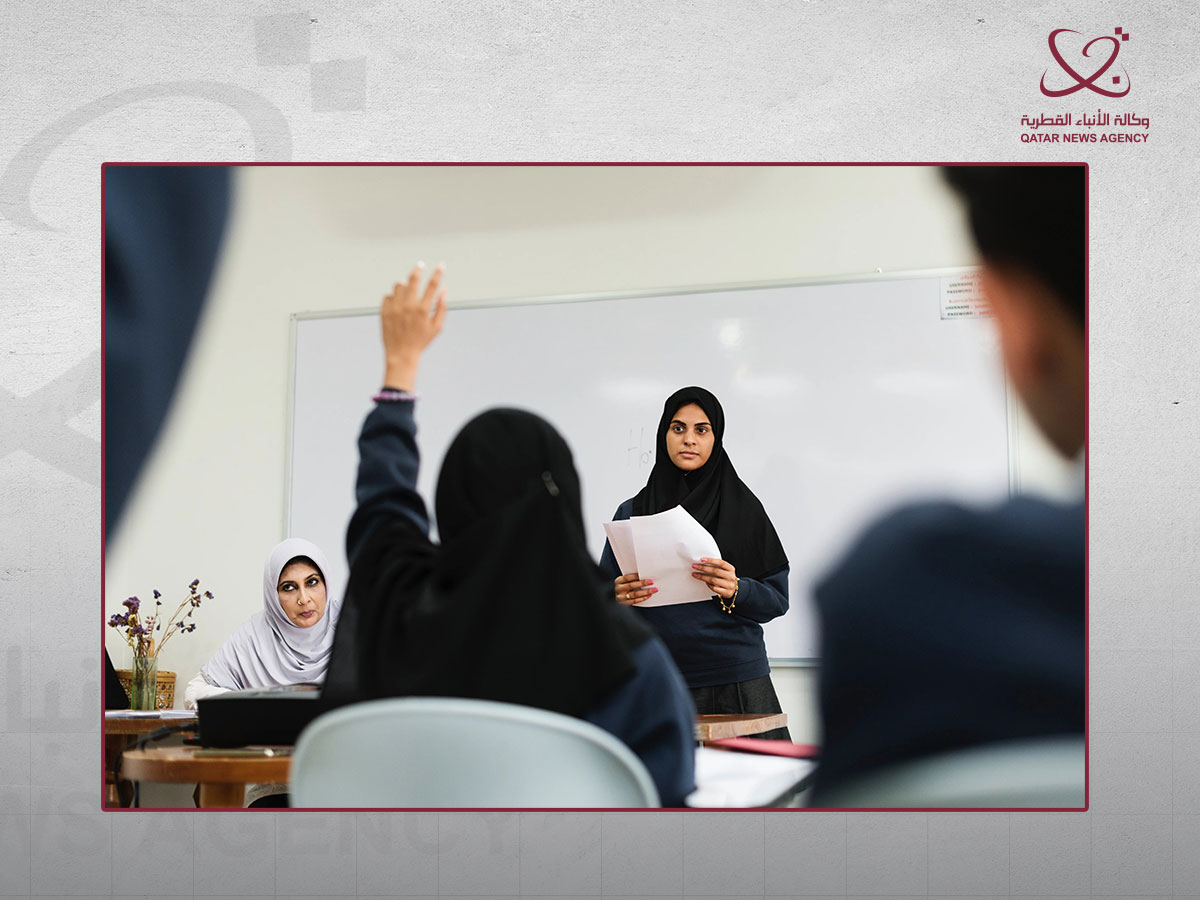
Qatari women are increasingly prominent in the nation’s education sector, with thousands serving as teachers and administrators. Their growing involvement is evident across various educational tiers, from public institutions to specialized schools and private sector administration. In government schools across Qatar, 4,031 female Qatari teachers are currently employed, forming a significant portion of the teaching workforce. Beyond public education, over 50 Qatari women hold positions in the administrative sector of private schools, demonstrating their influence in diverse educational environments. This growing involvement in education leadership was further noted when HE Lolwah bint Rashid bin Mohammed Al Khater assumed the role of Minister of Education in 2024, marking a significant appointment that shows the nation's commitment to female leadership at the highest levels of government.
The increasing presence of Qatari women in leadership and teaching roles reflects a broader societal shift towards empowering women in key national sectors. Their contributions are not limited to direct instruction but extend to shaping educational policies and administrative frameworks. The strategic placement of women in these roles is a testament to their qualifications and dedication, reinforcing Qatar's vision for a knowledge-based economy. This full engagement ensures that Qatari women are not only participants but also key architects of the nation's educational future.
Pioneering Roles in Education
Beyond public education, more than 30 female Qatari teachers have contributed to private schools in Qatar, broadening the scope of their impact within the educational landscape. These educators play a vital role in fostering diverse learning environments and contributing to the overall quality of education available in the country. The broader impact of Qatari women in educational leadership was first established in 2003, when HE Sheikha Ahmed Al Mahmoud became the first Qatari woman to hold a ministerial role, assuming the position of Minister of Education. This appointment marked a significant milestone for women in government leadership positions within the nation, setting a precedent for future female leaders. Her pioneering role paved the way for subsequent generations of Qatari women to aspire to and achieve high-ranking positions in both government and specialized sectors.
Educational institutions focusing on specialized fields also demonstrate the expanding scope of opportunities for Qatari women. Qatar Technical Secondary School for Girls, Qatar School of Banking and Business Administration for Girls, and Qatar Schools of Science and Technology for Girls are examples of specialized educational institutions in Qatar designed to equip students with specific skills for various sectors. These schools provide tailored curricula that prepare female students for careers in fields traditionally dominated by men, thereby diversifying the workforce and enhancing national capabilities. The existence and success of these institutions highlight a strategic investment in developing female talent in critical areas of the economy.
Within Qatar Foundation's Pre-University Education sector, a high proportion of female Qatari employees hold advanced degrees. Eighty percent of these employees possess higher academic qualifications, showing a commitment to expertise and professional development within the educational framework. This trend reflects the emphasis on academic achievement among Qatari women in the education sector, demonstrating their dedication to continuous learning and professional growth. The pursuit of higher education by Qatari women in this sector ensures a highly qualified and skilled workforce, capable of delivering innovative educational programs and leading future initiatives. Their advanced academic credentials contribute significantly to the intellectual capital within Qatar Foundation, fostering an environment of academic rigor and excellence.
Advancing Research and Healthcare
Qatari women are also making significant contributions to the fields of healthcare and scientific research, demonstrating their capabilities in critical scientific and medical domains. Dr. Noof Al Kuwari became the first Qatari nurse to join Sidra Medicine in 2014, marking a key moment in her career and for Qatari women in healthcare. Her entry into a leading medical institution like Sidra Medicine showed the growing opportunities for national talent in specialized healthcare roles. Her academic pursuits include earning a master's degree from the University of Glasgow in 2019, further enhancing her expertise in nursing and healthcare management. This advanced degree provided her with a deeper understanding of global healthcare practices and research methodologies. Dr. Al Kuwari continued her specialized education by obtaining a postgraduate certificate in pain management from the University of Edinburgh in 2021, showcasing her dedication to sub-specialization and continuous professional development in a critical medical field.
In recognition of her professional achievements and contributions to nursing, Dr. Noof Al Kuwari was made a Fellow of the Faculty of Nursing and Midwifery at the Royal College of Surgeons in Ireland in 2024. This prestigious fellowship is a testament to her outstanding contributions to the nursing profession and her leadership in healthcare. Her trajectory exemplifies the advanced educational and professional development pathways available to Qatari women in the medical sector, illustrating how they can achieve international recognition for their expertise. Dr. Al Kuwari's journey serves as an inspiration for aspiring female healthcare professionals in Qatar, noting the potential for significant impact and career progression.
Meanwhile, Dr. Fatima Al Khayyat has established an academic career rooted in scientific research, focusing on areas vital to public health. Dr. Al Khayyat holds a bachelor’s degree in zoology, providing a foundational understanding of biological sciences and animal life. Her academic journey culminated in a doctorate in medical entomology, a specialized field focusing on insects that impact human health, such as disease vectors. This academic background demonstrates a commitment to scientific inquiry and research within Qatar's broader healthcare and scientific landscape, contributing to the understanding and control of vector-borne diseases. Her work in medical entomology is key for public health initiatives and disease prevention strategies in the region. The achievements of both Dr. Al Kuwari and Dr. Al Khayyat highlight the growing presence and influence of Qatari women in critical research and healthcare roles, showcasing their diverse contributions to the nation's scientific and medical advancements. Their success stories show the increasing opportunities and support for Qatari women to pursue and excel in demanding scientific and medical careers, thereby strengthening the nation's capacity in these vital areas.
Institutional Support and Vision
Enrollment figures indicate a growing interest among Qatari female students in specialized and scientific fields, reflecting a strategic alignment with national development goals. During the 2025/2026 academic year, 6,541 female students were enrolled in the scientific track within government schools, marking a 4.2% increase from the preceding academic year. This substantial growth demonstrates a rising inclination among young Qatari women towards STEM subjects, which are key for innovation and economic diversification. This trend extends to specialized educational institutions, where 376 female students were enrolled in the same academic year, reflecting a growth rate of 12.2%. The significant increase in enrollment in specialized schools indicates a deliberate choice by female students to pursue focused education paths that lead to specific professional careers. These statistics show a sustained expansion in the participation of Qatari women in academic pathways that prepare them for careers in science, technology, engineering, and mathematics (STEM) and other specialized sectors, ensuring a pipeline of female talent for future industries. The increasing numbers highlight the effectiveness of initiatives aimed at encouraging girls to pursue scientific and technical education.
Institutional support also plays a significant role in fostering women's leadership across various educational and professional domains. Women constitute 66% of Qatari educational leaders within Qatar Foundation's Pre-University Education sector, demonstrating a strong representation in administrative and decision-making roles within a key educational body. This high percentage notes the commitment of educational bodies to promoting female leadership within their structures, recognizing the invaluable contributions of women to educational governance and strategy. This strong representation ensures that women's perspectives are integral to the development and implementation of educational policies. Further reinforcing the development of female leaders, Dr. Noof Al Kuwari, a prominent figure in healthcare, graduated from the Qatar Leadership Centre in 2022. Her participation in this program signifies the availability of advanced training and development programs designed to cultivate leadership skills among Qatari women across various professional domains, including healthcare. The Qatar Leadership Centre provides a platform for high-potential individuals to enhance their leadership capabilities, preparing them for influential roles in their respective fields. Dr. Al Kuwari's graduation from such a prestigious program exemplifies the concerted efforts to equip Qatari women with the necessary tools to lead and innovate in their professions.
Voices of Empowerment
Qatari women hold significant administrative roles within the education sector, showing their vital contribution to the operational and strategic management of schools. With 5,176 Qatari women working in the educational administrative sector in government schools across the nation, their presence is foundational to the functioning of the public education system. This substantial presence shows their deep involvement in shaping Qatar's educational landscape, beyond just teaching roles. Their administrative expertise is key for ensuring the smooth operation of schools and the effective implementation of educational policies. In a notable leadership appointment, HE Buthaina bint Ali Al Jabr Al Nuaimi assumed the position of Minister of Education in 2021, further exemplifying the advancement of women into top-tier governmental roles. Her appointment reinforces the nation's commitment to gender equality in leadership and notes the trust placed in Qatari women to steer critical national sectors.
Within Qatar Foundation's Pre-University Education sector, Qatari women represent 75% of the total Qatari workforce, indicating a strong female presence across various functions, including teaching, administration, and support roles. This high representation notes the integral role women play in the operational and strategic development of educational initiatives within one of Qatar's leading educational organizations. Their overwhelming presence ensures that the institution benefits from diverse perspectives and a highly dedicated workforce. More than 50 Qatari women also work in the educational administrative sector in private schools in Qatar, extending their influence beyond government institutions. This demonstrates a broad and widespread impact of Qatari women in administrative capacities across the entire educational spectrum. The collective efforts of these women in both public and private education sectors are instrumental in driving educational excellence and fostering a progressive learning environment for future generations. Their leadership and administrative capabilities are central to Qatar's ongoing educational reforms and its vision for a globally competitive education system.