From the archive
Qatar's Role in Protecting Education from Attack Noted by UNESCO Board Chair
UNESCO board chair praises Qatar's initiative in protecting education from attack, urging practical measures and global cooperation.
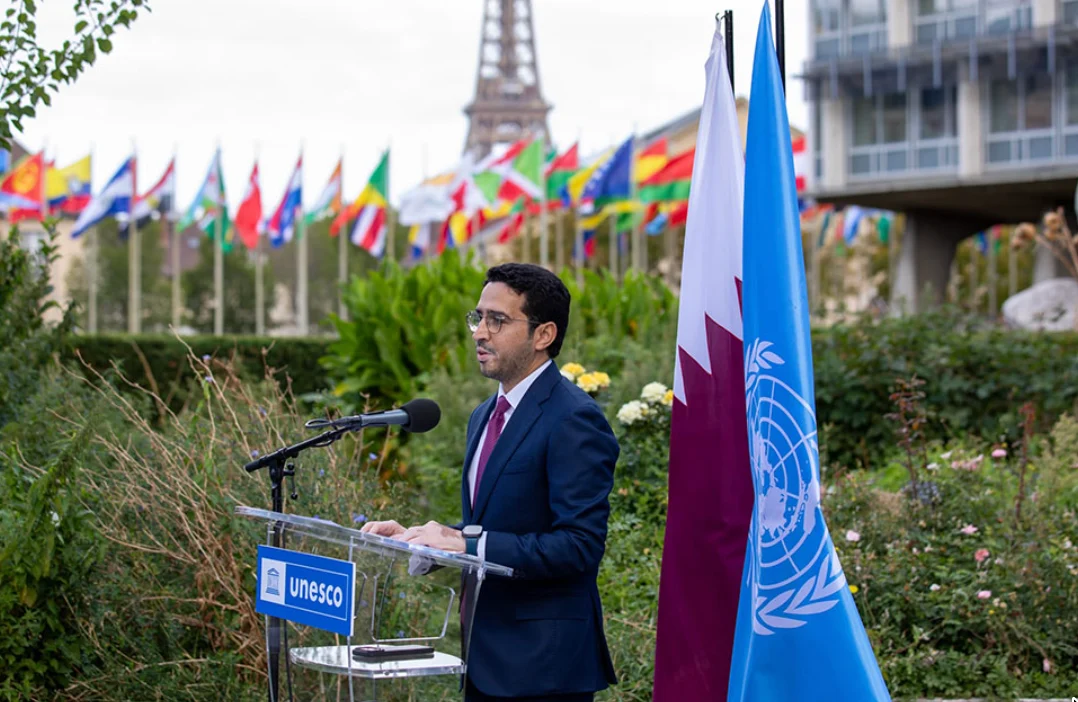
Nasser bin Hamad Al Hinzab, Chairperson of UNESCO’s Executive Board and Qatar’s Permanent Representative to UNESCO, affirmed that protecting education requires practical measures beyond mere commitments. His remarks showed the critical need for global cooperation and tangible actions to safeguard educational environments. Qatar initiated the International Day to Protect Education from Attack, pushing for its adoption by the UN General Assembly. This significant diplomatic effort led to the establishment of the annual observance, drawing international attention to the plight of education in conflict zones. Al Hinzab called the adoption "a major achievement and a strong foundation for what comes next," adding that "implementing the plan... Will take sustained political will, partnerships, and resources." He emphasized that "safeguarding education means moving past commitments to practical measures, including keeping learners and teachers safe and keeping classrooms running, even through crises and conflict." Al Hinzab stated that "the true benchmark for international efforts is ensuring learners and teachers are safe," noting the human element at the core of these protective initiatives.
Commemorating Education's Resilience
This year's observance of the International Day to Protect Education from Attack was held under the theme, "Can Education Survive Attacks? Human Societies’ Resilience." This theme resonated with the ongoing challenges faced by educational systems globally, particularly in regions affected by instability. The International Day, observed annually on September 9, serves as a key platform to raise awareness and advocate for the protection of educational institutions and personnel. In 2022, UNESCO marked the International Day with the State of Qatar and the Education Above All Foundation, demonstrating a concerted effort by key stakeholders. Sheikha Moza bint Nasser participated in the 2022 event, showing the collaborative efforts to safeguard education and reinforce the global commitment to this cause. Additionally, a preventive action plan successfully cleared the UNESCO Executive Board in April, further solidifying international commitments to protecting educational institutions and personnel during conflicts. This plan represents a proactive step towards mitigating threats to education.
A Framework for Protection
Nasser bin Hamad Al Hinzab delivered his remarks in Paris on September 9, coinciding with the International Day to Protect Education from Attack. The UNESCO Executive Board Chairperson noted a newly adopted plan, which he described as offering a full framework designed to support countries across various stages of a crisis. This framework addresses the needs of nations before, during, and after such events, focusing on prevention, preparedness, response, and recovery efforts. The plan aims to provide a structured approach to safeguarding educational continuity and infrastructure amidst global challenges, ensuring that learning can persist even in the most difficult circumstances. This full strategy is intended to bolster the resilience of education systems worldwide.
Call for Action and Commitment
The International Day to Protect Education from Attack is observed annually on September 9, drawing global attention to the imperative of safeguarding learning environments worldwide. This observance serves as a platform to advocate for concrete measures to protect students, teachers, and educational facilities during times of conflict and insecurity. It calls upon member states and international organizations to redouble their efforts in upholding the right to education.
In 2024, UNESCO’s Executive Board issued a call for a preventive action plan. This initiative seeks to establish a proactive framework to address threats to education before they escalate into full-blown crises. The plan emphasizes the necessity of foresight and preparedness to ensure that educational systems can withstand attacks and continue to operate effectively, even in challenging circumstances. It shows the shared responsibility of member states and international partners to uphold the right to education by implementing strong protective strategies. This forward-looking approach aims to minimize disruptions and protect the fundamental right to learn for all children and youth.