From the archive
Qatar Urges Global Migration Governance Overhaul at UN Forum
At the UN forum in New York, Qatar called for a global migration governance overhaul, prioritizing regular pathways, protection, and measurement.
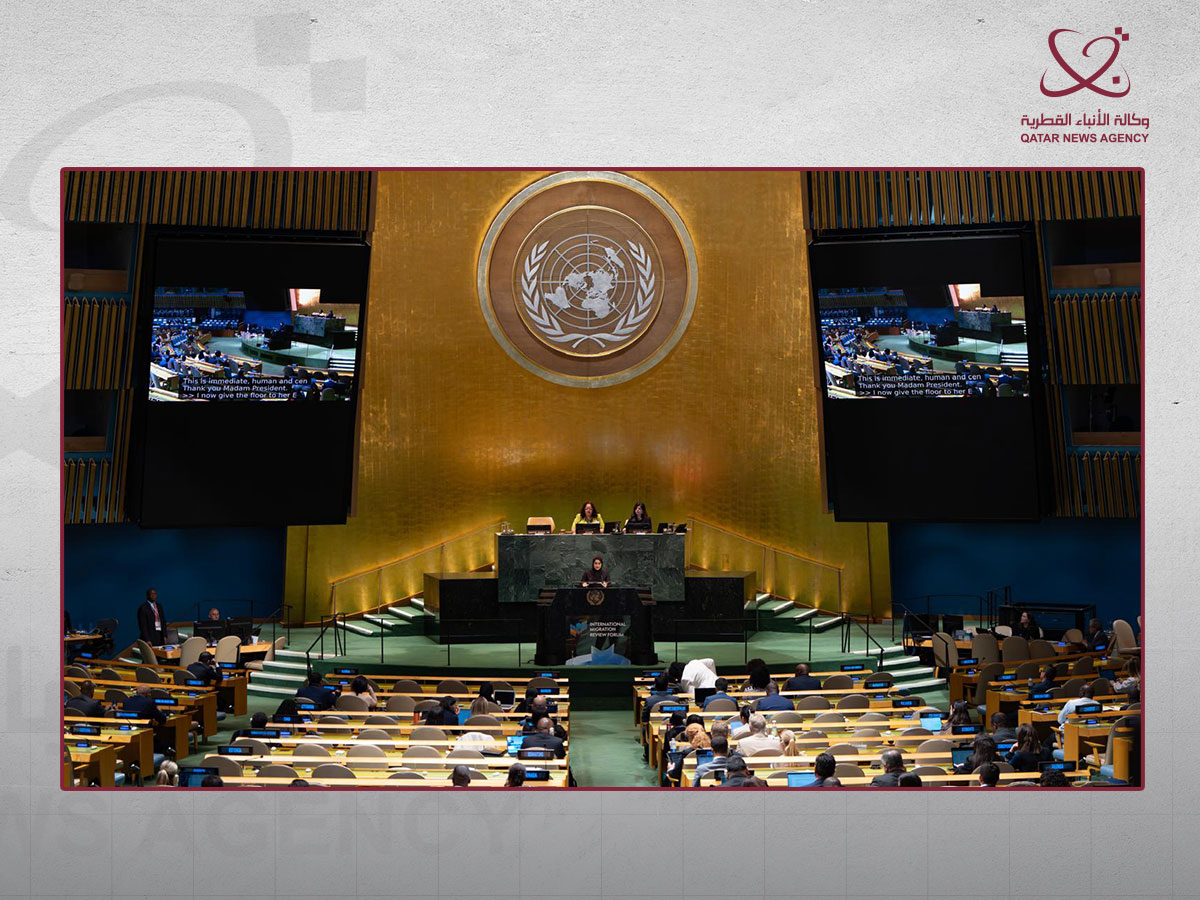
The State of Qatar called on the international community to prioritize three critical areas for the future of migration governance during the Second International Migration Review Forum in New York. The Second International Migration Review Forum, which took place in New York, served as a key platform for global discussions on migration policies and challenges, bringing together nations to deliberate on the path forward. HE Undersecretary of Labour, Sheikha Najwa bint Abdulrahman Al-Thani, delivered Qatar's statement, outlining the nation's perspective on improving international cooperation in managing migration flows. In her address, HE Sheikha Najwa bint Abdulrahman Al-Thani emphasized that the State of Qatar urged the global community to prioritize three key areas to advance the future of migration governance. Qatar showed the need for a full approach to address migrant rights, sustainable development, and global partnerships, framing these as essential pillars for effective and humane migration management.
Qatar's Three Pillars for Migration
Qatar advocated for the adoption of regular migration pathways as proactive policy instruments, moving beyond their current role as reactive alternatives to irregular migration. The nation specifically advocated for regular migration pathways to be embraced as proactive policy instruments rather than mere reactive alternatives to irregular migration, noting a shift towards more strategic and forward-looking migration management. The nation also noted the necessity of embedding protection across the entire migration cycle, encompassing recruitment processes in countries of origin through to the reintegration of migrants upon their return. This full approach aims to safeguard migrant welfare at every stage, ensuring their rights and well-being are protected from inception to conclusion of their migratory journey.
Qatar also stressed the importance of strengthening measurement mechanisms within the framework of the International Migration Review Forum. The country noted that the 23 objectives outlined in the Global Compact for Migration require monitoring tools that are commensurate with their ambitious scope. Qatar stressed the importance of strengthening these measurement mechanisms within the Forum's framework, recognizing that strong evaluation is key to progress. Such tools are deemed essential for effectively tracking progress and identifying areas for improvement in migration governance, allowing for data-driven adjustments and accountability.
Qatar emphasized that countries making investments in full migration governance today will gain a decisive competitive advantage. This advantage is projected to be key amidst the transformative impacts of climate change and technological innovation on global labor markets, suggesting a forward-looking strategy for national development and stability. Qatar noted that countries investing in full migration governance today will secure a decisive competitive advantage amid the transformative impacts of climate change and technological innovation on global labour markets, positioning themselves for resilience and growth in a changing global landscape.
Qatar's Domestic Reforms
Qatar has undertaken a full restructuring of its expatriate labour system, establishing a rigorous rights-based framework. This initiative included the termination of exit permit requirements, which provides workers with greater freedom to change employers within the country. Qatar ended exit permit requirements, granting workers greater freedom to change employers, a significant step towards empowering migrant workers. Further reforms saw Qatar implement the region's first non-discriminatory minimum wage, a measure designed to ensure fair compensation for all workers, regardless of nationality or background. The introduction of the region's first non-discriminatory minimum wage showed Qatar's commitment to equitable labour practices.
To enhance protections for migrant workers, Qatar established Visa Centres in countries of origin. These centres aim to ensure that protective measures are in place and understood by workers even before their departure for Qatar. Qatar established Visa Centres in countries of origin to ensure protections commence prior to departure, providing essential information and safeguarding workers from potential exploitation. The nation also bolstered its oversight framework, instituting clear legal and criminal accountability for any violations of labor laws. This strengthened enforcement mechanism is intended to deter abuses and ensure compliance, reinforcing the legal protections afforded to all workers. Qatar has bolstered its oversight framework and instituted clear legal and criminal accountability for violations, sending a strong message that infractions will not be tolerated.
An integrated governance model has been established, uniting policies across several key areas: labour, migration, residency, law enforcement, and anti-trafficking. This consolidated approach seeks to provide a cohesive and full strategy for managing the expatriate workforce and addressing related challenges, ensuring a holistic and coordinated response to complex issues. This integrated governance model ensures that all facets of migrant life and work are considered under a unified policy framework.
Global Leadership and Collaboration
Qatar has transitioned from being a participant State to a global leader within the Global Compact framework, a development that now influences the daily lives of over two million individuals. Qatar has evolved from a participant State to a global leader within the Global Compact framework, influencing the lives of over two million individuals daily through its progressive policies and advocacy. The nation reaffirmed its commitment to addressing existing gaps in migration governance openly, utilizing strong measurement tools to assess progress and identify areas for improvement. This commitment extends to active collaboration with key international partners. Qatar engages closely with the International Labour Organization and the International Organization for Migration, alongside fostering strong cooperation with countries of origin. Qatar reaffirmed its commitment to addressing gaps openly through strong measurement tools and active collaboration with international partners, including the International Labour Organization and the International Organization for Migration, alongside close cooperation with countries of origin. This collaborative approach shows Qatar's strategy to enhance global migration governance and ensure full oversight, demonstrating a dedication to shared responsibility and collective action.
Bilateral Engagements
HE Sheikha Najwa bint Abdulrahman Al-Thani conducted bilateral discussions with HE Minister of Foreign Affairs and International Relations of the Kingdom of Lesotho, Lejone Mpotjoane. During these discussions, HE Sheikha Najwa bint Abdulrahman Al-Thani engaged in bilateral discussions with HE Minister of Foreign Affairs and International Relations of the Kingdom of Lesotho, Lejone Mpotjoane, reinforcing diplomatic ties and discussing mutual interests in migration governance. She also engaged in separate talks with HE State Minister for Foreign Affairs of the Federal Republic of Somalia, Ali Mohamed Omar. HE Sheikha Najwa bint Abdulrahman Al-Thani also engaged in bilateral discussions with HE State Minister for Foreign Affairs of the Federal Republic of Somalia, Ali Mohamed Omar, further extending Qatar's diplomatic outreach and commitment to international cooperation on migration issues. These engagements show Qatar's proactive role in fostering international dialogue and partnership on critical global challenges.