From the archive
Kuwait and Qatar Revive Oil Exports Via Strait of Hormuz Amidst Geopolitical Tensions
Kuwait and Qatar have restored crude oil exports via the Strait of Hormuz to 70% of pre-war levels, aiding global oil price stabilization.

Kuwait and Qatar have restored their combined crude oil exports through the Strait of Hormuz, reaching approximately 70% of pre-war baselines. This significant recovery marks a key step towards stabilizing maritime trade routes for the two prominent Gulf nations. The resumption of these vital shipments indicates a concerted effort to normalize energy flows despite the persistent geopolitical tensions that continue to characterize the region and have previously led to severe disruptions in shipping operations. The Strait of Hormuz, recognized globally as a critical chokepoint, serves as the sole maritime passage connecting the Persian Gulf to the Gulf of Oman, making it an indispensable conduit for global energy supplies. The increased export volume stemming from Kuwait and Qatar not only bolsters regional economic recovery but also significantly enhances the reliability of international supply chains.
Export Recovery Details
The recovery of these exports, which has allowed Kuwait and Qatar to collectively restore approximately 70% of their pre-war baselines, relies significantly on specialized 'shuttle' operations. These operations are a sophisticated logistical adaptation, involving ship-to-ship transfers conducted strategically in the Gulf of Oman. This method allows for the efficient and safer movement of crude oil, circumventing some of the direct risks associated with traversing the entirety of the complex regional shipping environment under heightened tensions. Before the recent disruptions that severely impacted regional trade, the combined crude oil export baseline for Kuwait and Qatar stood at a substantial 2 million barrels per day. The current 70% recovery, therefore, indicates a substantial return towards previous production and distribution levels for both nations, showing their commitment to restoring the consistent flow of energy resources to international markets. These logistical adaptations have proven key in re-establishing vital trade routes and ensuring the continuity of supply.
Global Oil Flow and Price Impact
Global oil markets have observed Brent crude trading in the $86–$89 per barrel range, a notable decrease from earlier highs that reached $120. This more moderate pricing context coincides directly with the increased crude flows through the Strait of Hormuz. Daily crude flows exiting the Strait climbed to between 7 million and 8 million barrels per day in August 2026. This represents a significant and encouraging rise from mid-July 2026, when daily crude flows exiting the critical chokepoint were approximately 4 million barrels per day. The Strait of Hormuz historically routes about 20% of global petroleum shipments, making these recent increases in transit volumes particularly notable for the stability and predictability of international energy supply chains. The consistent movement of such large volumes through this waterway is a key indicator for global energy security.
Navigational Challenges and Diplomacy
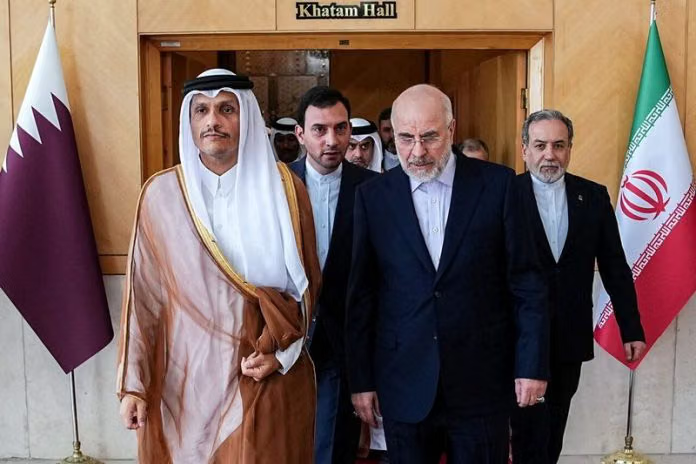
The region has faced considerable challenges, with traffic in the Strait of Hormuz nearly ceasing after the US-Iran conflict escalated dramatically on February 28, 2026. This severe disruption significantly impacted maritime operations in the critical waterway, leading to widespread concerns about global energy supply. Adding to these navigational challenges and security concerns, a Kuwait Petroleum Corp. Supertanker was struck while traversing the Strait of Hormuz in early August 2026, noting the ongoing risks to commercial shipping. Further complicating the situation for the vital 'shuttle' operations, Iran blacklisted 12 Very Large Crude Carriers in late August 2026, specifically targeting those involved in the ship-to-ship shuttle transfers in the Gulf of Oman. Amidst these developments and the precarious security situation, Qatari Prime Minister Sheikh Mohammed bin Abdulrahman Al Thani planned a diplomatic visit to Tehran. The visit aimed to address the critical issue of navigation control and ensure the safe passage of vessels through the Strait of Hormuz, showing the urgent need for de-escalation and diplomatic solutions to safeguard international trade.